

Are Stairlifts Safe? Safety, Care and Maintenance
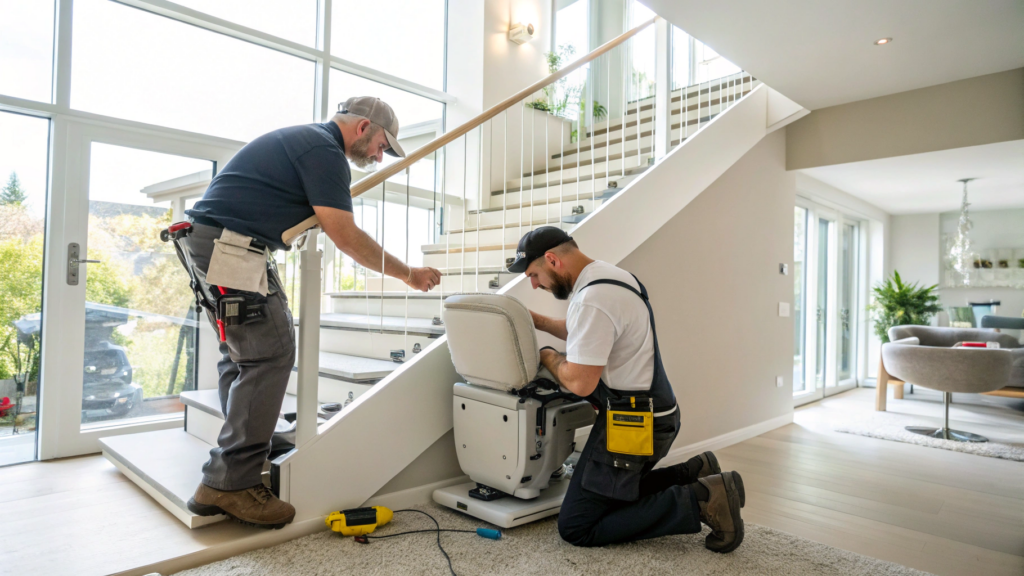
A properly installed stairlift is generally much safer than climbing stairs with limited mobility. Here is what to look for and how to keep it that way.
Built-in safety features
- Seatbelt to hold you in place.
- Obstruction sensors that stop the lift if something is in its path.
- Swivel seat so you step off onto the landing, not the stairs.
- Key or switch lock so children or visitors cannot use it.
Features vary by model, so check what your lift includes.
Using a stairlift safely
- Sit all the way back and fasten the seatbelt before you move.
- Keep hands, clothing and bags clear of the rail and moving parts.
- Use the footrest, and keep feet on it while travelling.
- Do not let others stand on the stairs where the lift travels.
- Do not carry heavy items on your lap.
Simple care at home
- Park the lift at the charging point so the batteries stay charged.
- Keep the rail and stairs free of dust, pet hair and clutter.
- Wipe the seat and controls with a damp cloth.
- Do not attempt repairs yourself.
Common problems and what they usually mean
- The lift will not move. Check that it is parked on its charger, that the seat is not folded up and the seatbelt is fastened, and that nothing is blocking the rail. If it still does not move, call for service.
- Beeping. Often a low battery or a blocked sensor.
- Jerky movement or unusual noise. Stop using the lift and arrange a service visit.
Service
Have your stairlift serviced by a qualified technician at the intervals the manufacturer recommends. Ask who will service yours when you buy.
Thinking about a stairlift? Read our buying guide, or book a free in-home assessment. You can also call 604-259-1211.