

Walk-In Tubs: What to Know Before You Buy
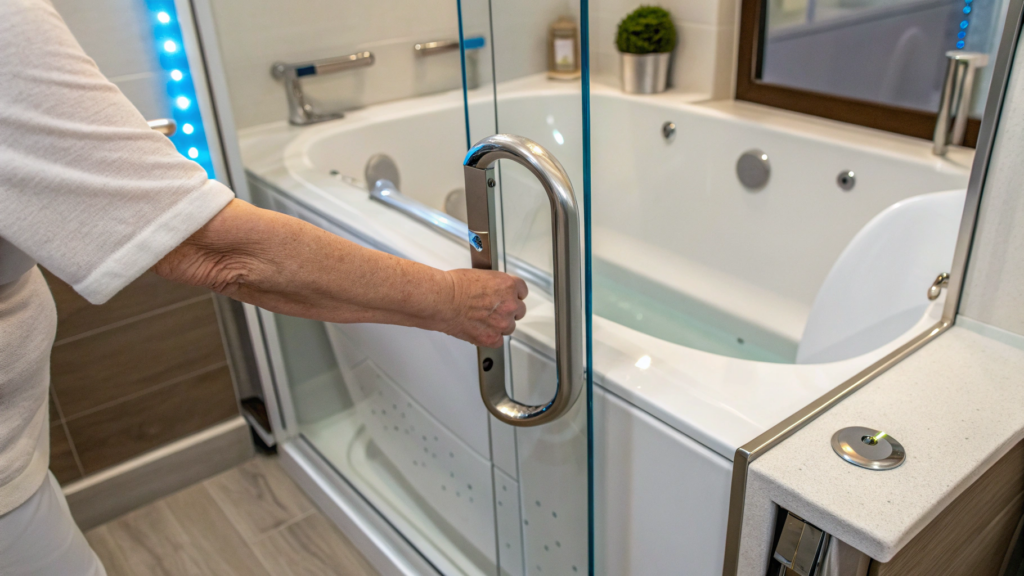
A walk-in tub has a low step-in threshold and a watertight door, so you walk in, sit on a built-in seat and bathe. For some people it is a good solution. For others, a different option is better.
The upsides
- A low threshold instead of a high tub wall.
- A built-in seat and a built-in grab bar.
- Soaking, which many people with sore joints value.
The honest downsides
- Waiting. You sit in the tub while it fills and drains, with the door closed, so it needs to be warm and comfortable.
- Space. Walk-in tubs are usually deeper and bulkier than standard tubs.
- Plumbing and electrical. Some models need extra work to your home.
- Transfer. You still need to be able to step in and sit down.
Acrylic or gelcoat?
Tub shells are commonly made of acrylic or gelcoat-finished fibreglass. Acrylic generally has a glossier, more durable surface. Gelcoat is often more affordable. Ask your supplier about the finish, the warranty and the door seal on any model you consider.
Our walk-in tubs
We offer walk-in tubs from American Tubs. See the Walk-In Tubs page.
Typical cost
Walk-in tubs commonly cost around $10,000 to $20,000 installed in Canada, depending on the model, features and any plumbing or electrical work.
Prices are indicative and accurate at the time of publishing; contact us for a current quote.
Alternatives
A tub cut-out costs less. A walk-in or roll-in shower is better if you cannot step or want faster bathing. Funding may be available for some, see the Home Accessibility Tax Credit.
Book a free in-home assessment and we will help you compare, or call 604-259-1211.