

10 Strategic Areas for Grab Bars, Safety Poles & Handrails in Your Home
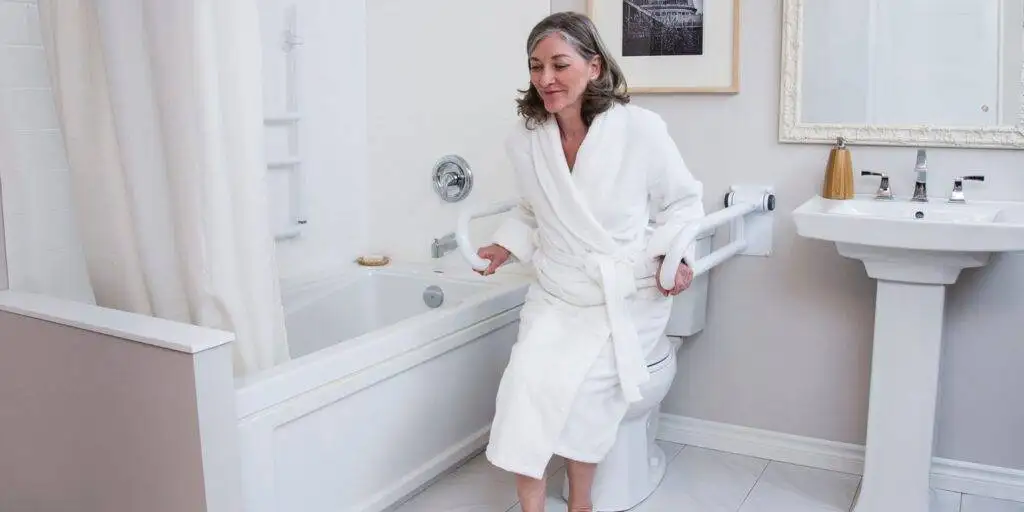
Where are the best places for grab bars, safety poles and handrails in your home? Getting accessibility aids installed can feel like a big job, so this guide walks you through it one area at a time.
Whether your household includes older adults, young children, or people of different ages and abilities, a few well-placed supports make the whole home safer for everyone.
What are grab bars, safety poles and handrails?
Grab bars are vertical or horizontal bars that let you steady yourself with both hands during everyday tasks in the bathroom and around the home. They come in many shapes and sizes, and some are built into the design of the bathroom so they look like part of it. See our grab bars and bath safety page for the full range.
Safety poles and rails give the same help with balance and with moving from sitting to standing. A pole can be mounted from floor to ceiling, which is useful where there is no sturdy wall to fix a bar to. Rails can sit on a wall or along the edge of a tub.
Handrails are best known on stairways, but they help in many other places too. Our handrails page shows what we install.
All three do the same job: they help prevent falls, support your balance and make changes of position easier. Knowing there is something dependable to hold on to builds confidence and keeps you independent. Installation is usually a short visit. When you buy the bar from us, installation is $150 for the first bar and $75 for each additional bar, plus the cost of the bar.
Common misconceptions
"They are only for the bathroom and the stairs." Those are the obvious spots, but falls also happen in the places people forget: hallways, doorways, the kitchen, the garage steps.
"I can just hold on to the towel rail." Please don't. Towel racks, counters, sinks and bookshelves are not built to carry your weight, and they can give way at the worst moment. A properly anchored bar is made for exactly that load.
"Grab bars look clinical." They no longer have to. Today's designs come in several finishes and styles that suit a modern home. Take a look at our INVISIA designer grab bars.
Where to place them: 10 strategic areas
1. The shower and tub area
- A vertical bar at the entry gives you something to hold as you step in and out.
- A bar inside the shower, on the wall you face and on the side wall, helps you stay steady on wet surfaces.
- A horizontal bar gives support while you stand or turn.
Height and angle should suit the person using it, so we mark the position while they stand or sit where they will use it. For a seat in the shower, see shower seats and transfer benches. If stepping over the tub wall is the main problem, a tub cut lowers the way in.
2. Where you reach for toiletries
Stretching for a towel, a medicine bottle or the shampoo on a high shelf can throw you off balance. Put extra support where you reach most. Several of our bars also work as shelves, soap dishes or towel holders, such as the PLUS series and the INVISIA designer bars, so they fit neatly into the room.
3. Beside the toilet
Getting up and down from the toilet is one of the most common moments when a person needs help. Bars at the side, and sometimes the back, let you sit and stand without straining your wrists and arms. The EasyMount grab bars are a straightforward choice here. Our bathroom team can plan the whole room around you.
4. Stairways
Handrails along one side of a staircase, and ideally both, add safety for everyone. The rail should be strong enough to take your full weight, continuous from the top step to the bottom, and extend a little past each end so you have support as you step off. A shape you can wrap your hand around is easiest to grip. If the stairs are a daily struggle, you may also want to look at stairlifts.
5. Long hallways
For anyone who tires easily or is unsteady on their feet, a long corridor can be a challenge. A rail along the wall gives support between rooms and a place to rest a hand. Handrails come in a range of finishes, so in a hallway they can look like part of the decor.
6. The porch and main entrance
Doorways are easier for everyone when there is something to hold while you find your keys, ring the bell, turn the handle or step over the threshold. Outdoors, choose weatherproof products with a non-slip grip, mounted vertically at a height that suits all users. If you have a ramp, put handrails along it too, especially for wet and icy days. See our ramps and entry solutions.
7. Doorways inside your home
A bar or pole at interior doorways helps people move from room to room with confidence, especially older adults and people with limited mobility. The more good places to hold, the more chances to stop a fall.
8. The kitchen
The kitchen is one of the busiest rooms in the house, and for people who are unsteady on their feet, standing for long periods raises the risk of a fall. It may look as if cabinets and counters leave no room for bars, but there is often space beneath the countertop or along a work surface, without getting in the way of drawers and cupboard doors. A floor-to-ceiling pole is another option for a specific spot.
9. Garage and laundry steps
Steps from the garage or a basement laundry room into the house can be slippery from oil, clutter, detergent or spilled water. A rail or bar on one or both sides of those steps gives you support, however many steps there are.
10. Anywhere you move from sitting to standing
Think about every place where you or a loved one has to stand up or sit down: beside the couch, the bed, the dining table, the vanity. Support in those spots makes a real difference. If there is no sturdy wall nearby, a floor-mounted pole or rail may be the answer, and we can work through the options with you at your free assessment. For more on spacing and mounting, read where to place grab bars and handrails.
Choose the right bar, then have it fitted properly
A bar is only as safe as the way it is fixed. Every bar and rail should be anchored into wall studs or proper blocking and rated for the weight it may carry. If you are not sure which bar suits you, read how to choose grab bars, or look at specialty rails for less usual situations.
Conclusion
The biggest improvements in home safety often come from small changes. Safety is a journey, not a one-time job, and a few grab bars, poles and handrails in the right places are a good first step. You don't have to give up style for safety. There is a wide range of shapes, sizes, finishes and metals to suit your taste and your home.
A more accessible home is a safer home, and a more comfortable and enjoyable one for you and the people you love.
Home2stay is your home accessibility partner in Vancouver and the Lower Mainland. Book a free in-home assessment and we will walk through your home with you, or call 604-259-1211.