

Stairlift vs. Porch Lift: Which Is Right for Your Home?
A stairlift and a porch lift solve different problems. A stairlift carries you up a staircase while you sit in a seat. A porch lift, also called a vertical platform lift, raises a platform straight up so you can get from the ground to a porch, deck or entry door. Which one is right depends on where the barrier is, how you move between sitting and standing, and what your needs may look like in a few years.
This guide walks through the three things that matter most: transfers, your home layout and long-term mobility. It is not medical advice. Your doctor, occupational therapist or care team knows how you move best, so talk with them about your own needs before you choose equipment.
What is the difference between a stairlift and a porch lift?
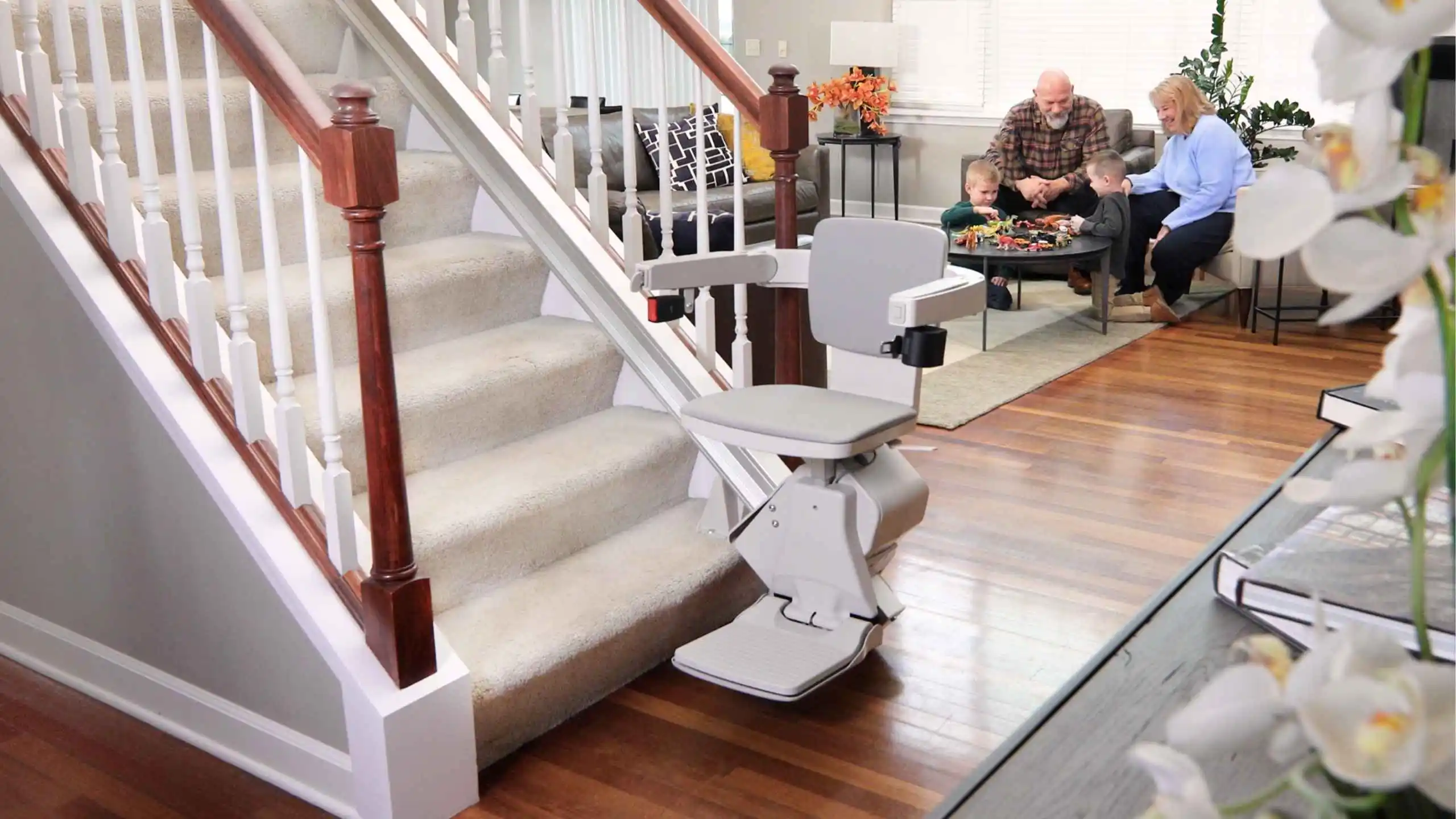
A stairlift is a seat on a rail fastened to the stair treads. You sit down, ride along the stairs, and stand up at the other end. Straight and curved models exist for indoor and outdoor stairs. See our stairlifts.
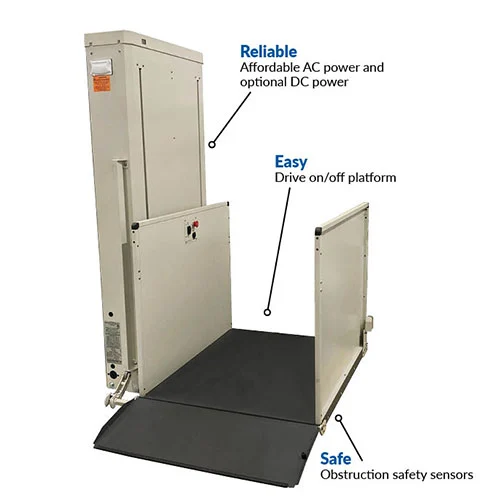
A porch lift is a platform that moves vertically in a compact footprint. The person stands, or stays seated in a wheelchair or scooter, on the platform while it rises. Our Bruno platform lifts come in two residential series, the VPL-3100 and the VPL-3200, both with a 750 lb (340 kg) capacity. The VPL-3200 is available in travel heights up to 10 feet.
How do transfers change the choice?
A transfer is the move from one seat or position to another. It is often the deciding factor.
With a stairlift, you transfer on and off the seat at both ends of the ride. If you use a walker or cane, you may want a second one kept upstairs, or someone to bring it. Folding seats, armrests and footrests keep the stairs clear when the lift is not in use.
With a porch lift, the platform carries you and your mobility device. A wheelchair or scooter user can stay seated for the whole ride, so there is no transfer onto a lift seat. This is why porch lifts are often considered when someone uses a powerchair or scooter to get around.
Questions to think about:
- Can you stand, turn and sit down safely and comfortably, every day, at both ends?
- Do you rely on a walker, wheelchair or scooter that needs to travel with you?
- Will someone else use the lift, such as a caregiver or a family member?
Only you and your healthcare team can answer these for your situation. We are happy to look at the home side with you.
How does the layout of my home affect the choice?
A stairlift is usually the better fit when the barrier is a staircase, indoors or a few outdoor steps, and you want to reach the upper or lower floor.
A porch lift is usually the better fit when the barrier is a high porch, deck or entry. A ramp is the other common answer, but by code a ramp needs about 1 foot of length for every 1 inch of rise (a 1:12 slope). A 24 inch rise means a ramp around 24 feet long, and a porch at 36 inches or more can mean a ramp system that takes over the front yard. A porch lift rises straight up and takes only a few square feet. See our ramps and entry options to compare.
A porch lift is freestanding, but it needs some preparation:
- A stable concrete pad.
- A smooth, level approach path to the lower landing.
- Power nearby, either household current (AC) or battery (DC). Battery power keeps working in a power outage. All electrical work is done by licensed Red Seal tradespeople.
- For indoor travel between floors, code requires the lift to run inside an enclosed hoistway.
Our guide to porch and vertical platform lifts goes into more detail.
What if my mobility changes over time?
This is the question we hear most from families, and it is a good one to ask early. A few things to think about:
- Today and in a few years. If you walk with a cane today but a wheelchair or scooter may be part of your life later, a porch lift at the entry may still make sense when a stairlift would not.
- Both can be needed. Some homes have a high entry and an interior staircase. One does not replace the other.
- Renting is an option for stairlifts. If your need is short term, a straight stairlift can be rented from $250 per month. See renting vs buying a stairlift.
Your occupational therapist or doctor can tell you what to expect for your own situation. We will plan the home options around their advice.
What does each one cost?
A straight stairlift is typically around $3,000 to $7,000 installed. A porch lift costs more than a stairlift and depends on the travel height, power choice and site preparation, so we quote it after we see your home. Our stairlift cost guide explains what moves a price up or down.
Prices are indicative and accurate at the time of publishing; contact us for a current quote.
Depending on your situation, you may be able to claim the Home Accessibility Tax Credit or get help from BC RAHA.
How do I decide?
- Write down where the barrier is: stairs inside, steps outside, or a high porch or deck.
- Talk with your healthcare team about how you transfer and what you may need later.
- Think about who else will use the lift.
- Ask us to look at the site. A free in-home assessment shows what fits your home.
Not sure which one fits your home? Let’s look together
We serve homes across the Lower Mainland. Book a free in-home assessment and we will listen first, look at your stairs or entry, and give you honest advice, whether that is a stairlift, a porch lift, a ramp or something else. You can also call us at 604-259-1211.