

Signs You May Need a Stairlift
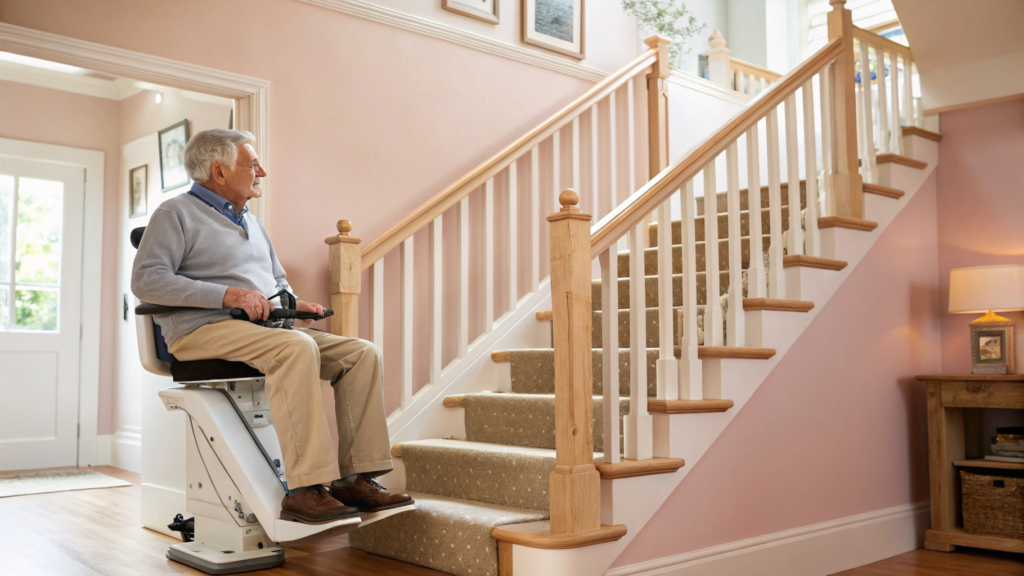
Most people do not decide to get a stairlift in one day. The need shows up slowly. Here are the signs that stairs are becoming a risk.
Everyday signs
- You pause, rest or grip the rail halfway up or down.
- You avoid the stairs, or stay on one floor to avoid them.
- You have had a fall, or a near fall, on the stairs.
- Your knees, hips or back hurt when you climb.
- You feel breathless or dizzy on the stairs.
- You carry things up and down less because you need a hand free.
- A family member worries every time you use the stairs.
Why do my knees hurt on stairs?
Climbing stairs puts several times your body weight through your knees. Arthritis, worn cartilage, muscle weakness or an old injury can all make stairs painful. Pain on the stairs is worth discussing with your doctor or a physiotherapist. A stairlift does not replace treatment, but it can remove the daily strain.
Who can use a stairlift?
Stairlifts suit many people with limited mobility, including people with arthritis, heart or lung conditions, balance problems, or recovering from surgery. The user needs to be able to sit safely, hold the controls and use the seatbelt. If someone cannot do that, an occupational therapist can advise on other options, and we can work alongside them. See our page for clinicians.
The benefits
- Safer stairs for the person and less worry for the family.
- Access to the whole house, including bedroom and bathroom.
- A way to keep living at home with independence.
What to do next
Talk to your doctor or occupational therapist if you are unsure. When you are ready, book a free in-home assessment, or call 604-259-1211. You can also read about our stairlifts.